顯示具有 台青蕉樂團 標籤的文章。 顯示所有文章

2024-07-21

2024台青蕉巡演專場-緣投的水果不太甜。原汁原味,產地直送


新鮮上市,品質保證
原汁原味,產地直送
在叫賣與音樂的共振裡
與農共舞,尋找自我最緣投的模樣
緣投的水果,搖滾走店
買不到的,歡迎來現場挑!
有甜蜜、苦澀,通通是人生獨特的魅力
跟著水果漫步,在最派的旋律、農村的帥氣中,自由飛翔~

2019-05-14

台青蕉youthbanana <種下青春>第二波專輯巡演


找到寄望的所在,種下理想的人生,收成自由的果實

🈵🈵即將在春暖花開的五月與大家見面。台青蕉樂團 《種下青春》專輯第二波巡迴演出登場。

2019-03-13

台青蕉 《種下青春》專輯介紹。2019全新台語專輯,數位同步上架。

找到寄望的所在,種下理想的人生,收成自由的果實


「音樂就是生活,認真地生活才能寫出感動人的歌」最新專輯《種下青春》作為我們成軍第10年重要的里程作品,訴說溫暖的土地人情,帶給混亂的社會一種樸實真誠的感動。


 我們生活在一個充滿對立、價值衝突的時代,年輕人在這個社會裡生存變得無奈又困難。在成長的過程中,這個世界常常讓自己忽略了身邊日常的生活,追求遠方被設定的價值,在自己的青春留下的,彷彿都不是給自己的承諾。

2019-02-01

台青蕉youthbanana <種下青春>第一波專輯巡演 旗山場、台中場、台北場演出訊息


台青蕉十週年 | 《種下青春》Episode 1 旗山:養分及土壤


新專輯準備上架
        2019年一月台青蕉準備上架的新創作作品種下青春 ,持續以台灣農村特色傳統產業出發創作,囊括台灣戲院文化、農村經濟消費文化、倡導自然生態、地方觀光與地方議題等。

        我們生長在是一種充斥對立、價值的不連續的時代,以致大家走入厭世潮流,被迫忽略身邊的生活而強調遠方的價值,讓自己的身體無法好好累積土地的養分,來許下自己的青春與承諾。

       希望你因為有我們的音樂陪伴,願意嘗試更多的可能性,對自己種下承諾,更自由地選擇自己想要的樣子,有一天,我們也會陪著你收成。


在台青蕉這十年的歲月裡,以這張專輯分享我們種下的青春。

2019-01-31

<種下青春>旗山家鄉回饋場,演出X老台菜X小旅行


旗山,一個香蕉種植的國度,也是充滿文化想像與老產業林立的鄉村。
一場用音樂為主題的旅行,聆聽旗山歌謠的開始,參加不同感受的演出盛會後,再帶著老台菜的香氣與香蕉的熱情,來一場新春的特別感受。2/16週六,16:30準時開唱。

2014-03-15

<從旗山的社區大小事講起,一起搖滾做音樂>台青蕉社區大小事,二波巡演資訊


 從旗山的社區大小事講起,一起搖滾做音樂。

小鎮的開始和沒落,香蕉的靜止和跳動,這是台青蕉樂團獨特的成長背景,不只有鄉愁,而是把鄉愁變成一種可以了解的愛,做成音樂跟大家分享。台灣鄉村與農業,不單只有淡淡的悲傷,應該要有陽光和熱情的能量。

今年2014年的春夏天,我們準備了不一樣的台青蕉音樂要跟大家分享,選擇用不插電的形式,溫暖的唱起我們的故事,搖滾不是音樂的形式,而是一種關心社區的模式,說唱在你我生活的角落,聽著我們熱切的鼓舞,你會進入一所優良的學府,跟我們一起搖滾。

巡演資訊

4/3-6日
春天吶喊
插電演出
<購票入場>

4/20(日)
15:00-16:00
台中市誠品綠園道
不插電演出
<免費入場>

4/25(五)
20:00-22:00
桃園那兒咖啡
with:Chris Hsu
不插電演出
<低消入場>

4/26(五)
19:00-20:00
台北後門咖啡
不插電演出
<低消入場>

5/17(六)
中山大學南區熱門音樂祭
插電演出
<免費入場>

5/17(六)
20:00-21:00
高雄誠品夢時代
不插電演出
<免費入場>

5/18(日)
15:00-16:00
台南誠品台南文化中心店
不插電演出
<免費入場>

6/07(六)
15:00-16:00
誠品虎尾合同廳舍店
不插電演出
<免費入場>


巡演好康
台青蕉社區大小事專輯販售,凡到巡演現場購買,一律  特價350$

台青蕉自然農法香蕉,現場免費吃。

台青蕉香蕉文創,現場特價優惠。

巡演DM


演出邀約

相關演出邀約,請E-mail:w610126@gmail.com,或電洽07-6611451。經理人:丸子。

2013-10-16

2013台青蕉樂團「社區大小事」專輯-搖滾開跑!


你的社區發生了什麼事?
你夠了解自己生活的環境嗎?

一張以社區行動的搖滾的專輯
 台青蕉樂團社區大小事,志在告訴大家台青蕉在旗山社區營造的過程,所發生的種種故事,陣陣具速度感的和絃與鼓聲,鋼琴與電子效果的伴奏,直接而雄厚的BASS聲音催促,這是一種我們在用搖滾樂告訴大家,''到底社區怎麼了''的方式。

2013-08-07

2013台青蕉樂團-社區大小事專輯預購頁面,一起來支持社區好聲音


台青蕉樂團在揆為4年,在2009發行EP香蕉他不肥之後,2013年即將要發行新的專輯-社區大小事,在八八風災即將邁入第四年的時刻,我們將發行一張關切風災後社區狀況的專輯,希望透過搖滾樂,帶各位來好好認識我們居住的旗山,透過小地方的故事,看見大社會的一切。好聽的專輯,全新的曲風,青春大男孩精神,搖滾的態度,這就是青年返鄉的力量,讓社區聲音越來越踏實。

2013-08-06

社區大小事專輯,台青蕉徵臨演志工一起來拍MV

台青蕉「社區大小事」專輯要拍MV啦!徵求熱愛音樂、熱愛香蕉(相交)、熱愛社區的各位一同參予MV的演員,共同完成以「社區」為主題的專輯。

本次兩首MV呈獻的感受與議題皆不相同,有諷刺社區歷史建築物無理由遭拆遷、社區中人與人間連結遭抹滅的「一個瘋所在」;也有呈現蕉農與年輕人互動情懷的「作伙那卡西」。

本兩首MV不失台青蕉以往的熱情、KUSO、詭譎來筆筆道出社區酸甜苦辣的變動。在此台青蕉熱情的邀請您一同參予社區大小事專輯MV的拍攝。

2012-12-04

2012年希望搖滾日活動全都錄

2012年11月25日,希望搖滾日活動,在我們希望蕉園熱情放送了。看到手指向的方向,就是這次的活動場地~香蕉園。

2012-10-12

20年後,台灣也許就品嘗不到便宜又好吃的香蕉!

2012年10月4日 19:43
點評:如果本土香蕉消失,不只是失去一種水果,而是整個國家的產業崩落...
記者林育綾/專題報導
      大家都知道「五月天」在金曲獎上吃香蕉造成話題;卻很少人知道,台灣若再不重視農產業,20年後可能品嘗不到好吃又便宜的本土香蕉了!香蕉也許會變成稀有的進口水果,像魯肉飯一樣漲價兩三倍甚至更多。現在高雄旗山是我國的知名的香蕉產地,當地有一個名叫「台青蕉」(台灣青年愛香蕉)的團體,由一位不到30歲的青年王繼維主導,幫助蕉農行銷香蕉,就是希望本土特色的農產文化得以傳承,美麗的田野不再被工廠吞噬,人們的身心健康也不因此被汙染而不自知。
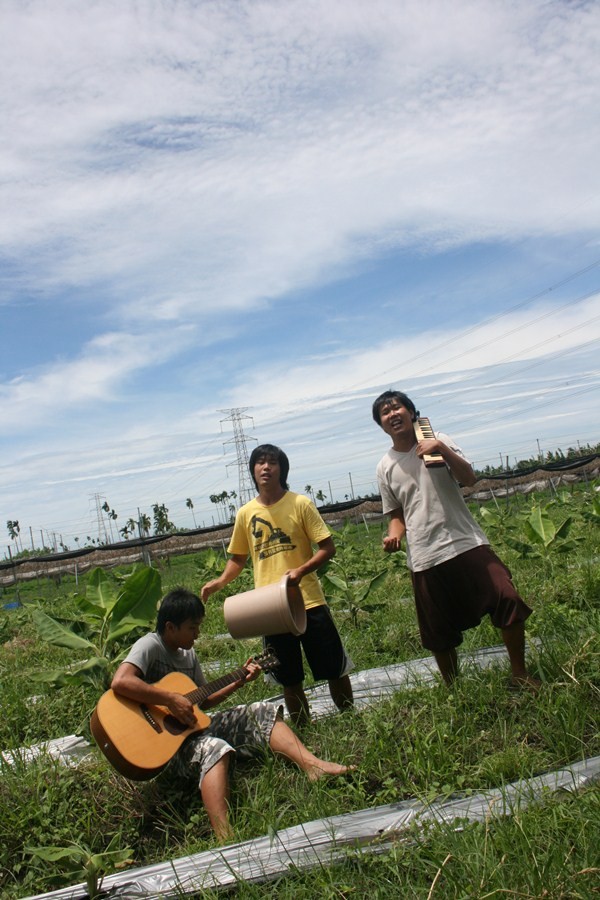
▲「台青蕉」團員在田野裡
玩音樂,連五月天都喊讚。
(圖/王繼維提供)


      早期教育方針跟社會風氣,都鼓勵青年「出走」。去都市、去唸書、去當律師、當老師、當科技新貴,彷彿這樣的工作才叫「成功」、才叫「有價值」,很少有父母親希望小孩跟自己一樣在田野間穿著粗衫,頂著太陽辛苦工作。而媒體也不斷報導哪個產業有發展、有錢途;哪個產業沒落、沒未來,影響大眾的價值觀。但觀察至今,哪一個職業是真正有保障?當人們都漸漸忘了自己的根,忘了看一看自己的土地,只會隨波逐流,崇洋媚外,這個國家的生產力和競爭力勢必走下坡。

       綽號「老王」的王繼維是個29歲的青年,碩士畢業後就選擇返鄉打拼,在家鄉的基金會成立「台青蕉」這個新穎部門,專幫辛苦的蕉農行銷香蕉因為很多蕉農最不懂的就是行銷,只知道辛苦的種,於是很多農民被盤商剝削,被大財團吞噬,也沒有政府當靠山,一個個種不下去。
       為了推廣高雄旗山香蕉,老王用了很多點子,其中一個是「音樂」,他召集另外四個大男孩組成「台青蕉樂團」。多樂團表演是丟Pick、砸吉他來熱場,他們則是發香蕉給觀眾吃,連日本NHK都來採訪。「五月天」在今年金曲獎上也用吃香蕉來代表「相交(香蕉)在一起」、如「蕉」似漆的濃厚感情這兩個樂團是彼此臉書上的朋友,也會互通有無,一北一南,都是很有想法的年輕人。
老王說,「我一直不覺得土地非要變成『都市』的模樣,才叫做有經濟價值。也不認為什麼樣的工作才叫進步、才叫好,只要做好自己崗位上的事,就是好工作,所以,我也一直在對抗那些扭曲的主流價值觀。」
      他曾經替500個蕉農拍照,一一拍下他們的臉龐。教授看了後說,「這些蕉農的臉龐,很可能再過20年就會全部消失了。」換句話說,若始終缺人接手,20年後可能台灣就吃不到本土香蕉。

2012-10-10

觀光局旅遊雜誌Travel in Taiwan 採訪

觀光局旅遊雜誌Travel in Taiwan  2012.9.10月號刊登


原始網址:http://www.tit.com.tw/page_e/magazine1_1.php?id=3801


Banana Kingdom ─ Visiting Kaohsiung’s Qishan District


More often bypassed than visited, Qishan is used to being neglected by tourists rushing through en route to the Hakka district of Meinong or the religious center of Foguangshan. However, this bustling-yet-bucolic township – now officially part of the Greater Kaohsiung municipality – is not only charming, but can also rightfully claim to have played an important role in Taiwan's economic and agricultural history.

By Steven Crook

Qishan is synonymous with one crop – the banana. Amid the cornucopia of delicious fruits grown in Taiwan, these yellow-skinned delights are quite humble. They’re commonplace and inexpensive. When people want to make a gift of fruit, few opt for bananas. They’re more likely to buy perfect peaches, gorgeous grapes, or prestigious pitayas.

Half a century ago, Japanese consumers couldn't get enough of Qishan's bananas. Ninety percent of the bananas eaten in Japan were from Taiwan, and exports of the fruit generated a third of Taiwan's foreign-currency earnings. An entire section of the Port of Kaohsiung was dedicated to the fruit. The warehouses where they were kept cool before shipping, now known as Banana Pier (www.banana-pier.com.tw), have been revamped into a shopping-and-banqueting complex.

At the height of the boom, each banana tree generated as much income per year as a teacher earned in a month, and it's said that for every six bananas a farmer sold to Japan, he could buy a quality suit. Not that banana farmers made a habit of wearing fine garments – it's also said that even in their free time, while shopping or drinking with friends in the town of Qishan, bachelor farmers liked to wear their sap-stained work clothes. This wasn't due to any sense of thrift; they did so because everyone knew banana growing was lucrative, and advertising one's occupation was a surefire way to attract a wife.

Banana growing was lucrative, and advertising one's occupation was a surefire way to attract a wife

Arriving in Qishan on one of the frequent buses which link it with Kaohsiung’s high-speed railway station (40 minutes one way), Travel in Taiwan met up with members of the Zun-Huai Foundation, an NGO established in Qishan in 1995 to preserve and promote local culture, community sentiment, and ecology.

Zun-Huai has a small number of bicycles, which tourists are welcome to use (free for the first two hours) so they can explore the town in a fun and eco-friendly manner. Its office is a two-minute walk from Qishan’s South Bus Station. The foundation doesn’t currently organize any English-language activities, but this may change. Some of its younger workers speak English and are eager to help; getting in touch with the foundation ahead of time by telephone or e-mail is a good idea, whether you’re hoping for an in-depth tour or simply want to borrow a bike.

Among Zun-Huai’s core members are five young men who play music together under the name Youthbanana (youthbanana.blogspot.com). The band, which recently appeared on the same bill as Taiwanese pop-band kings Mayday, performs original Chinese- and Taiwanese-language rock songs which, they hope, will inspire young people to value local agriculture and pay greater attention to their communities and the environment.

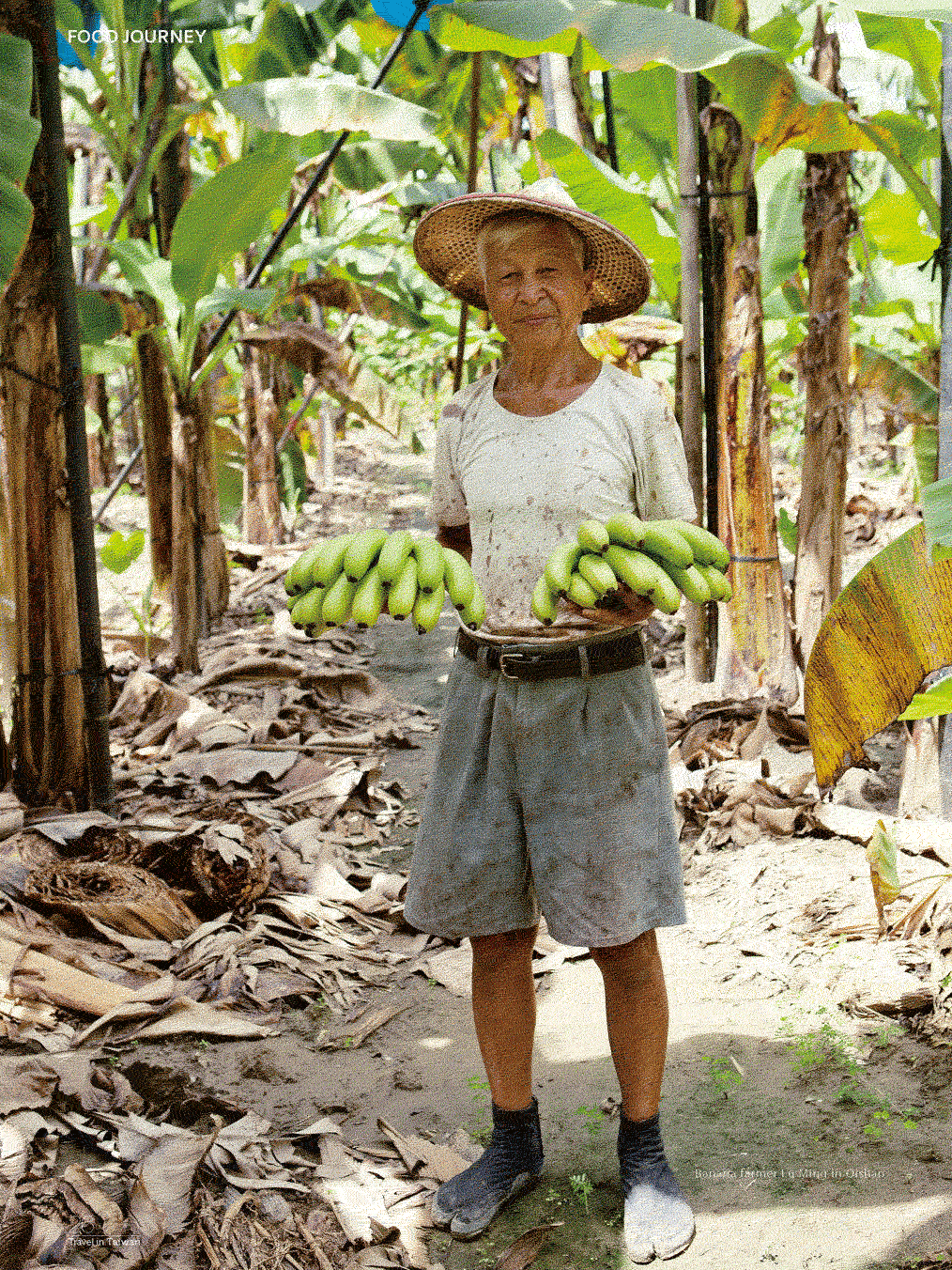
Lao Wang, Youthbanana’s songwriter-keyboardist, points out that the average age of Qishan’s banana farmers is now over 60, and that very few young people consider a career in farming. The white hairs of two banana-growing veterans we met confirmed this: Lu Ming is 76, while Lu Chao-qun is 87.

Lu Chao-qun stands straight as a die, and scampers up ladders like a man half his age. He doesn’t wear glasses or use a hearing aid. Each morning he rides an old bicycle 14km from home to field. If more people could meet this walking advertisement for the farmer’s lifestyle, surely agriculture wouldn't lack for recruits.

As you’d expect, both men know a good banana when they see one. Peel that's a uniform color may look attractive, but Lu Ming points out that those with some black spots are invariably sweeter. Bananas harvested at the end of winter are the best, he goes on to say, as they are more flavorful and slightly chewy. Those grown in the summer, by contrast, are relatively watery and soft on account of the hot season's heavy rains.

Banana peel that's a uniform color may look attractive, but those bananas with some black spots are invariably sweeter

Qishan is especially suitable for growing bananas, Lu Ming explains, because the soil is sandy and so drains well. Until tall levees were built along its bank, the Qishan River flooded every few years, covering nearby fields with fresh, nutritious sediment. Bananas prefer temperatures of 25 to 30 degrees Celsius; Qishan never gets especially cold in wintertime, and during the summer rain-bearing winds beat back the heat.

However, the replenishing layers of silt are now a thing of the past, and banana leaf-spot disease (caused by a fungus) is a serious problem. The disease, which turns banana leaves yellow, doesn’t kill the plants – but farmers are only able to sell about half of the bananas that grow on affected trees, down from the 80 percent yield for healthy trees. Because of these difficulties, many of Qishan's farmers have turned to cucumbers, beans, and other crops.

To give city folk a taste of farming life and the satisfaction of nurturing something they can later eat, Zun-Huai has launched a DIY banana-growing program. Participants pay NT$3,000 for each tree they plant, but they get a third of this back in the form of gifts. A single tree can produce up to 50kg of bananas, so those who sign up can expect plenty of bananas to share with friends and relatives.

No pesticides are used on the plot set aside for this activity, and the only fertilizer applied to the soil is an organic concoction made from rice, peanut, sesame, and soybean.

The gifts include items made and sold by the NGO, such as a cake made from local beijiao bananas – the kind of bananas, a Cavendish variant, which accounted for most of Qishan’s exports during the industry’s heyday. The cake is made with minimal salt and sugar, and no artificial flavors. What’s labeled in Chinese and English as a banana beverage is in fact 8 to 12 percent alcohol; it can't be labeled as a wine or liquor for legal reasons. The malt cookies, also made with beijiao bananas, are satisfying without being cloyingly sweet.

Other banana-related products are also easy to find in Qishan. If your energy is flagging, try banana-flavored coffee (available hot or cold). To cool down, enjoy banana ice cream or banana shaved ice.

About the Banana
So what exactly are bananas? The banana plant is a herbaceous native of Southeast Asia which humans have been cultivating for thousands of years. Rich in fiber, potassium, vitamins B6 and C, and manganese, the fruit is as healthy as it is tasty.

Bananas are grown in more than 100 countries, most close to the equator, and in almost every county in Taiwan; the island’s banana groves are the world’s most northerly. Cavendish bananas – the long, bright-yellow fruit familiar to supermarket shoppers throughout the world – thrive in Taiwan’s climate, as do less-sweet, greenish plantains. The former made fortunes in Qishan; the latter are more suitable for cooking and the making of processed foods.

Qishan Attractions
Until 1979, trains ran between Kaohsiung and Qishan. The tracks are long gone, but the old Qishan Railway Station, pale-blue and made of wood, has been preserved. The exhibit inside has some information about the railroad, as well as the local banana and sugar industries.

Anyone curious about the last should make a point of dropping by the Qishan Sugar Refinery, on the main road to Meinong. These days no sugar is produced there, but tourists can enjoy popsicles while their children clamber over disused locomotives.

Another attractive landmark is the Wudo Dojo. The original, built in 1934 as a place to learn martial arts, burned down in 1994. The current structure is a 2001 rebuild, an example of Japanese architecture in what is otherwise a neighborhood of pure Taiwanese character.

2012-07-25

希望蕉園~travel in Taiwan travel in chishan


希望蕉園在7月23日好有趣,由行政院觀光局主編的台灣旅遊雜誌,工作團隊sunny和史提夫及攝影小姐三人,來走訪旗山香蕉產業。希望藉由國際能見度高的雜誌報導,提供希望認識台灣香蕉產業與旗山文化的阿多仔朋友,有更多資訊可以了解。

2012-07-19

2012年07月09-11香蕉小遊俠營隊


希望蕉園在暑假的大活動之一,除了遊學台灣的活動外,就是和社區學校結合,推展香蕉文化,讓在地的孩子有機會體驗,在田園生活中,取得紮根與文化傳承。今年和溪洲國小合作已經是地七個年頭,讓社區的大哥哥大姐姐帶著孩子,踏在我們熟悉又陌生的土地上,都讓孩子有許多驚奇和感動。

2011-08-12

台青蕉夏天倒「暑」演出特報

台青蕉夏天倒「暑」演出特報


哈囉~親愛的蕉迷


暑假過了一半啦~


有沒有出去踏青蕉遊呢?


告訴你兩則八月份好消息


台青蕉又有演出啦


還沒機會出去的伙伴


不妨趁這個機會來台南吧


享受一下暑假香蕉的熱情~


8/20
台南TCRC獨立音樂展演空間

介紹:當天久違的台青蕉五人小組即將合體~將會有一場不可錯過的精彩表演!!

地點:台南市中西區西門路二段314號B1 (西門圓環上)

時間:20:20(可進場),21:20(台青蕉)

TCRC官網

台青蕉FB活動版


2011-07-06

入夏開跑,嘉義新港草地市集


一早就從高雄出發到嘉義練團,吃完家義美食之後大家精神百倍!第一次到嘉義表演,真的很興奮。可以表演兼旅遊,鼓手蟲屎非常開心,興致一來就買了一罐啤酒應景。


  今天表演非常舒服,大家都把鞋子脫了!!!


當然這次還是要帶香蕉啦!送給台下的觀眾~
阿公收到香蕉好高興阿~馬上就剝來吃了‧感覺非常滿足~


今天主唱卷毛很放得開,也唱得很不錯!

  現場有人就馬上買了我們的EP,真是太開心了~馬上就給粉絲來個簽名


沒辦法到場看很殘念嗎?沒關係~丸子有幫大家拍攝現場表演影片喔~


表演完不太有時間再逛逛市集,但週邊的小東西真的很引起大家的童心耶!!

謝謝現場來看表演的觀眾,希望之後還有希望再來表演~


捲毛你可以不要那麼ㄍㄧㄥ嗎?脖子有點酸~ 捲毛你可以不要那麼ㄍㄧㄥ嗎?脖子有點酸~


托這次出去表演的福,拍了好多團照~

更多現場影片:
第一名、夙夜匪懈http://www.youtube.com/watch?v=Fsq4uk_2avQ
滴答滴答 http://www.youtube.com/watch?v=u_BvrfD7oms&feature=related

2011-06-16

台青蕉樂團又來開唱啦~

台青蕉樂團又來開唱啦


哈囉!!各位熱愛台青蕉音樂的朋友有福啦


台青蕉樂團在本週六日皆有表演唷


台青蕉樂團裡的三個大學生


冒著六月底期末考週被當的危險


還是要趁在暑假前


好好的跟大家一起HIGH一下


唱一唱台青蕉自創曲「香蕉他不肥」


讓考試那凝重的氛圍舒緩一下吧


表演以下為「泥」介紹唷:


新港草地市集----【新港鐵路公園西月台


新港草地市集


2011

Photo by 燕子


活動時間:100年618 () 10:00~17:00 (遇雨取消)


活動地點:新港鐵路公園西月台   嘉義縣新港鄉中正路2號(附近)


活動內容:藝術市集、二手市集、輕食、台青蕉樂團表演(15:30-16:30)


主題活動:悅讀手繪熱


和台青蕉一起去嘉義『蕉』朋友吧


☆☆☆★★★☆☆★★★★☆☆☆☆★★★☆☆☆☆★★★★★★☆☆☆☆☆★☆☆★★☆☆★★★★★☆☆


台灣香蕉節活動-----【旗山後壁田】


活動時間:100年6月18、19 (六、日) 


活動地點:旗山後壁田      高雄市旗山區華中街(旗山國小對面)


活動內容:香蕉大街、香蕉文化展、香蕉闖關大賽、台青蕉樂團表演(6/19(日)PM14:30-15:00)


很高興可以在自己家鄉演唱,將帶來不同以往的演唱哦~敬請期待


相關網站連結:


台灣香蕉節


新港草地市集

熱門文章